
REVIEW: THE SPY WHO CAME IN FROM THE COLD | LOWRY | 22/07/2026

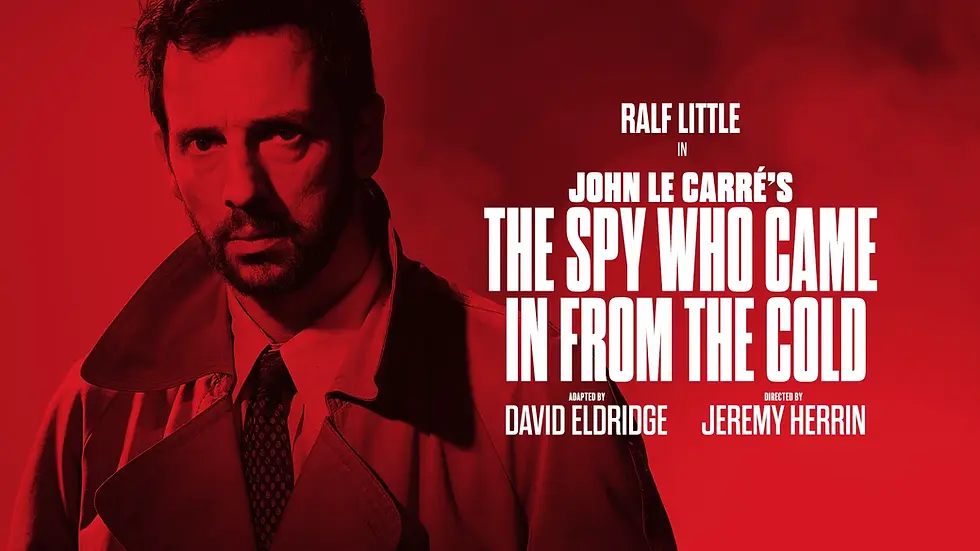

THE SPY WHO CAME IN FROM THE COLD AT THE LOWRY – A COMPLEX COLD WAR SPY DRAMA
I went into The Spy Who Came in from the Cold knowing very little about the story. I'd never read John le Carré's famous novel or seen any of the previous film or television adaptations, so I was experiencing this Cold War spy drama for the very first time.
Now touring the UK following successful runs in Chichester and London's West End, David Eldridge's stage adaptation brings John le Carré's acclaimed novel to the stage for the first time. Starring Ralf Little as British intelligence officer Alec Leamas, this production focuses on storytelling, atmosphere and character rather than fast-paced action.
Knowing so little about the story, I was interested to see how this much-loved spy novel would work on stage.
Originally published in 1963, The Spy Who Came in from the Cold became one of John le Carré's best-known novels and is widely regarded as one of the classic Cold War spy stories. More than sixty years later, David Eldridge has adapted the novel for the stage for the first time, with Jeremy Herrin directing the production for its UK tour.
Set during the Cold War, the story follows British intelligence officer Alec Leamas, who believes he is finally leaving the dangerous world of espionage behind. Instead, he is persuaded to undertake one final mission that soon becomes far more complicated than he ever expected.
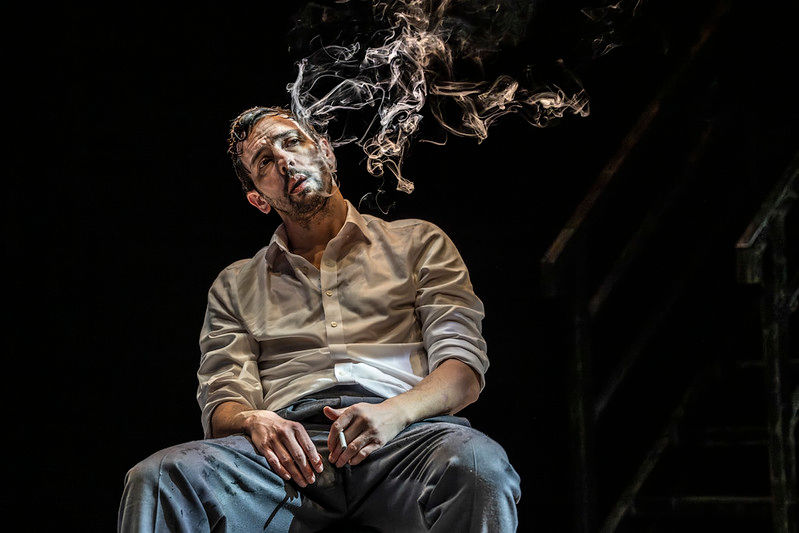
The play opens in Berlin, where British intelligence officer Alec Leamas witnesses one of his agents being shot whilst attempting to cross the border. Ready to leave the dangerous world of espionage behind, Leamas believes his career is finally coming to an end. Instead, he is persuaded to take on one last mission.
Returning to London, Leamas begins living under a new identity and takes a job in a library, where he meets Liz Gold. As his mission unfolds, he finds himself caught in a web of lies, betrayal and deception, where nobody seems quite as trustworthy as they first appear.
Without giving too much away, this is a story with plenty of twists and turns. The first half introduces a large number of characters, organisations and conversations, and as someone experiencing the story for the first time, I found myself concentrating throughout to keep track of everything that was happening. There were several moments where I thought I had worked things out, only for another twist to completely change what I thought was going on.
Although the first half requires plenty of concentration, the story becomes easier to follow after the interval as the bigger picture gradually begins to emerge.
Although there isn't a huge amount of action, the production still manages to create plenty of tension. Rather than relying on dramatic chase scenes or spectacular set pieces, the suspense comes from never quite knowing who can be trusted or what might happen next.

One of the production's biggest strengths is its simple but effective staging.
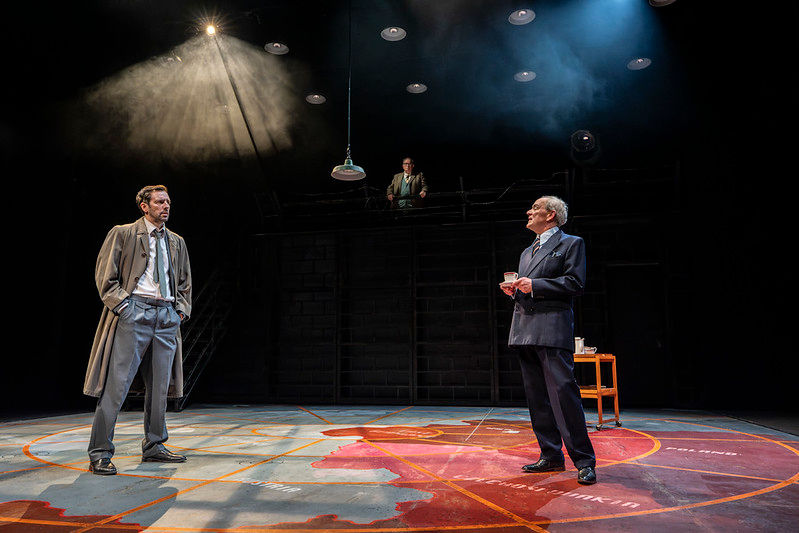
The imposing Berlin Wall dominates the stage throughout much of the performance, acting as a constant reminder of the divided world these characters are living in. Rather than relying on elaborate scenery changes, the production uses a handful of carefully chosen pieces of furniture to transform each location, allowing the story to move smoothly from one scene to the next.
One detail I only fully appreciated after the performance was the large map design built into the stage floor. Looking at the official production photographs afterwards, it's clear just how much detail has gone into this feature. From our seats in the stalls, however, much of it wasn't visible, meaning we missed one of the production's more impressive visual elements. I imagine audience members sitting higher up in the Circle or Upper Circle would have a much better view of this clever design feature.
The lighting works beautifully alongside the minimalist set to create the mood throughout the production. Searchlights, dark shadows and isolated pools of light help create a constant feeling of tension, while Elizabeth Purnell's sound design and Paul Englishby's subtle musical score quietly build suspense without ever distracting from the performances or dialogue.
The costumes also help establish the early 1960s setting, with smart suits, trench coats and period clothing helping transport the audience back to Cold War Europe while allowing the focus to remain firmly on the story.
Ralf Little takes on the demanding role of Alec Leamas and is rarely off stage throughout the performance. He gives a convincing portrayal of a man who has spent years working as a spy and no longer knows who he can trust. Whether he's carrying out dangerous assignments, questioning those around him or quietly reflecting on everything that has happened, Little keeps the audience invested in Leamas from beginning to end.
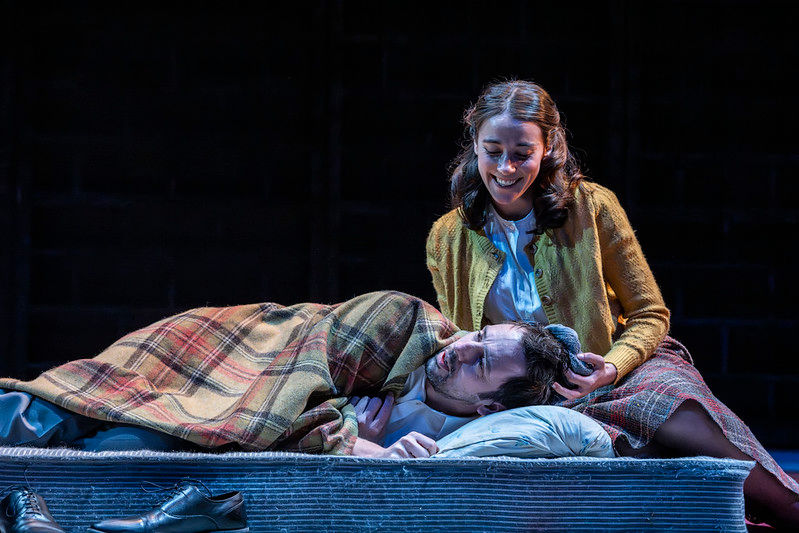
Gráinne Dromgoole is equally impressive as Liz Gold. She brings warmth and kindness to a production that is otherwise filled with suspicion and deception, and her growing relationship with Leamas provides some welcome quieter moments amongst the many twists and turns. The chemistry between the pair feels believable, making their scenes together some of the strongest in the production.
Tony Turner delivers a calm and measured performance as George Smiley, while Nicholas Murchie commands attention as Control, the head of British intelligence. Peter Losasso is suitably intimidating as Hans-Dieter Mundt, creating a constant sense of unease whenever he appears on stage, while Eddie Toll also gives a strong performance as Fiedler during some of the production's most memorable scenes.
With such a complicated story to tell, the cast work hard to make each character feel distinct, helping the audience keep track of the many different relationships and shifting loyalties throughout the evening.
The Spy Who Came in from the Cold is certainly a production that asks a lot of its audience. I'll admit I found the first half quite challenging at times. There are lots of characters to meet, plenty of information to take in and several twists that completely change what you think is happening. I found myself concentrating throughout to keep up with everything, and there were moments where I was still trying to work out who was working for who before another surprise came along.
Thankfully, everything started to come together during the second half. Once I understood the bigger picture, I found myself much more invested in the story and was keen to see how it would all end.
The production is beautifully staged. The simple but effective set, atmospheric lighting and strong performances all work together to create the tension needed for a story like this, while the decision to keep the focus firmly on the characters allows the storytelling to take centre stage.
Although I didn't connect with the story enough for this to become one of my favourite productions, I can certainly appreciate why it has remained such a popular spy story for more than sixty years. If you enjoy theatre that gradually reveals its secrets and don't mind concentrating throughout, The Spy Who Came in from the Cold offers an engaging evening with plenty of twists along the way.
A complex Cold War spy drama brought to life by a strong cast.
The Spy Who Came in from the Cold will be at the Lowry until Saturday 25th July 2026. Tickets are available using the link below.
For more information about the production, including tour dates and show details, visit the official website below.
Photo Credit - Johan Persson
*Our tickets for this show were kindly gifted in exchange for an honest review.


Comments